Being a submissive without a Dom is more common than most people realize. If you’ve spent any time in D/s forums, subreddits, or FetLife groups, you’ve seen this question come up over and over: can a sub actually practice submission alone? Is solo submissive practice a real thing, or is it just treading water until the right person shows up?
The short answer is yes. You can practice, and you should. But the longer answer is more interesting, because how you approach solo submission shapes what kind of submissive you become, whether you eventually find a partner or not.
This question comes up so often because a lot of people discover their submissive side before they find someone to explore it with. Maybe you’ve been reading about D/s dynamics and something clicked. Maybe you had a taste of it in a past relationship and want to keep growing. Maybe you know exactly who you are but haven’t found the right Dom yet. Whatever brought you here, you’re not alone, and you’re not stuck.
Submission Is an Identity, Not a Transaction
A lot of subs fall into the trap of treating their submissive nature as something that only exists inside a dynamic. No Dom means no submission. You’re on pause until someone shows up.
The problem with that framing is obvious: it hands all the agency to someone who isn’t there yet. Your identity, your growth, your practice, all stuck in a waiting room.
The people who actually thrive in D/s relationships are usually the ones who did the work first. They understood their own desires before asking someone else to manage them. They built structure and discipline on their own terms. They showed up to a dynamic with self-knowledge, not just availability.
That doesn’t happen by waiting. It happens by practicing.
If you think about it, most skills work this way. A musician doesn’t stop playing between bands. An athlete doesn’t stop training between seasons. Your submissive identity doesn’t require someone else’s presence to exist. It requires your own attention and investment.
What Solo Submissive Practice Actually Looks Like
The way people approach solo submission varies a lot depending on what kind of submissive they are and what they’re working toward. There’s no single template. But the core idea is consistent: you create structure for yourself and you hold yourself to it.
You decide what your tasks are. You set your own standards. You track your own progress. You figure out what accountability looks like when there’s no one else checking in.
In practice that looks like:
Building routines around your values. What does a good day look like for the version of you that’s living in alignment with your submissive nature? Morning ritual, physical care, acts of service, creative work. Structure this deliberately and treat it seriously. Our list of 30 daily tasks for submissives is a good place to find ideas that work in solo practice too.
Practicing discipline without external enforcement. This is the hard part, and also the most valuable part. When you’ve trained yourself to follow through on your own commitments, a Dom isn’t teaching you discipline from scratch. They’re directing something that already exists.
Getting specific about what you want. What tasks feel meaningful to you? What rewards actually motivate you? What does accountability feel like when it hits right? You can’t answer these for a future partner if you’ve never explored them yourself. We put together a list of beginner task ideas organized by dynamic style that can help you figure out which flavors resonate.
Tracking and reflecting. Streaks matter even when no one’s watching. Completing something you set out to do still feels good. Breaking your own streak still stings. The gamification loop works even without another person on the other end.
Practical Solo Submissive Tasks You Can Start Today
If you’re sold on the concept but wondering what to actually do, here are concrete practices that subs use when they’re on their own. Pick what resonates, skip what doesn’t. The point is building a personal system, not copying someone else’s.
Journaling and Self-Reflection
Journaling is probably the single most recommended solo practice in kink communities, and for good reason. Writing about your desires, reactions, and boundaries forces you to articulate things that are easy to leave vague in your head. A few prompts to get started:
- What does submission mean to you, personally? Not what you’ve read or seen, but what you actually feel.
- What kinds of tasks excite you? Which ones make you anxious? Which ones make you feel cared for?
- Write about a time you felt genuinely submissive. What was happening? What made that moment click?
- What would your ideal dynamic look like in six months? In a year?
You don’t need a fancy system for this. A notebook works. A notes app works. The habit matters more than the format. Try committing to one entry per week and see what surfaces.
Self-Discipline Tasks
This is where solo practice gets practical. Assign yourself tasks and hold yourself to them. Some ideas that work well without a partner:
- Morning protocols. Wake at a set time. Make your bed a specific way. Follow a grooming routine in a particular order. The structure itself is the point.
- Physical tasks. Exercise goals, stretching routines, posture practice. These build body awareness and discipline simultaneously.
- Timed tasks. Give yourself a time limit for something, like cleaning a room, preparing a meal, or completing a workout, and stick to it. The constraint creates the pressure.
- Restriction tasks. No phone for the first hour of the day. No snacking after a certain time. Screen time limits. These train the part of you that follows rules even when nobody is checking.
- Service tasks. Do something for someone else, a friend, a family member, a community, with the same intentionality you’d bring to serving a Dom. The skill of service doesn’t require a specific recipient.
Personal Protocols
Protocols are small, consistent behaviors that remind you of your submissive identity throughout the day. When you’re solo, you get to design these yourself, which is actually a gift. You’re figuring out what rituals feel meaningful to you before someone else assigns them.
Some examples: a specific way you take your coffee each morning, a phrase you write down before bed, a particular way you organize your space. These might sound mundane, but that’s the point. Submission lives in the ordinary moments, not just the intense ones.
Skill-Building and Kink Education
Time without a partner is time to learn. Read books on D/s dynamics, power exchange philosophy, and relationship structures. Listen to podcasts from people in the community. Take workshops if they’re available in your area.
The subs who’ve invested in understanding the broader world of power exchange bring a depth of knowledge to their dynamics that’s hard to build once you’re already in one. A few books worth reading: “The New Bottoming Book” by Dossie Easton and Janet Hardy, and “Different Loving” by Gloria Brame.
You can also build practical skills that will serve you in a future dynamic. Cooking a specific meal on request, learning rope care and maintenance, practicing meditation or breathing exercises for headspace. These feel productive because they are. You’re investing in capabilities, not just reading about them.
What the Community Says About Being a Submissive Without a Dom
If you spend any time on kink forums, FetLife groups, or D/s subreddits, you’ll find this conversation happening constantly. And the consensus from experienced practitioners is pretty consistent.
Most people who’ve been in the lifestyle for a while will tell you that the best submissives they’ve encountered did significant work on themselves before entering a dynamic. They knew their limits. They could articulate their needs. They had a track record of following through on commitments. That self-knowledge didn’t appear from nowhere. It came from practice.
There’s also a growing recognition that being a submissive without a Dom isn’t a temporary holding pattern. Some people practice solo submission as a long-term approach, either by choice or because they haven’t found the right partner yet and refuse to settle just to fill the role. The community increasingly respects that as a legitimate path rather than treating it as an incomplete version of “real” submission.
That said, you’ll still encounter people who insist submission only counts if there’s a Dom involved. You can safely ignore that take. It usually comes from people who conflate submission with obedience, and those are different things. Obedience requires someone to obey. Submission is an orientation, a way of engaging with structure and service and vulnerability. That’s yours regardless of your relationship status.
Benefits of Practicing Submission Solo
Beyond the obvious benefit of staying connected to your identity, solo practice builds specific skills that directly improve your future dynamics. And even if you never partner up, these benefits stand on their own.
Self-awareness. You learn what motivates you, what triggers resistance, what kinds of tasks feel like growth versus what feels like drudgery. A Dom who gets a partner with that kind of self-knowledge can build a much more effective and fulfilling dynamic from day one. But even without a partner, understanding your own patterns makes you better at navigating the rest of your life too.
Discipline that’s internally driven. There’s a real difference between a sub who follows rules because someone is watching and a sub who follows rules because they’ve built the habit. Both are valid. But the second one is more resilient. When life gets hard or the dynamic hits a rough patch, internally driven discipline keeps things steady. Solo practice is where you build that muscle, because nobody is going to build it for you.
Clearer boundaries. Solo practice gives you space to figure out your limits without the pressure of a live dynamic. You can experiment with different types of tasks and see how they land emotionally. You can push yourself a little further one week, pull back the next, and notice how each adjustment feels. That kind of exploration is harder to do when someone else is setting the pace.
Patience and standards. When you’re actively practicing, you’re less likely to rush into a bad dynamic just because you’re craving the structure. You already have structure. A potential Dom becomes someone who enhances what you’ve built, not someone you need to feel complete. That shift in framing protects you from settling for dynamics that don’t serve you.
A stronger sense of your own submission style. Not every submissive wants the same things. Some are drawn to service. Some want protocol and ritual. Some want physical challenges. Some want emotional vulnerability. Solo practice lets you try all of these without pressure or judgment, and you come away knowing which flavors actually resonate with who you are.
Transitioning from Solo to Partnered Practice
One of the best things about doing solo work is that it gives you a foundation to bring into a relationship. But the transition itself is worth thinking about. When you are ready, our guide on how to start a D/s dynamic walks through the practical steps.
When you do find a partner, the shift from self-directed to partner-directed can feel strange at first. You’ve been running your own system, making your own rules, holding yourself accountable. Handing that over requires trust, and trust takes time.
A few things that help with the transition:
Share what you’ve learned about yourself. All that journaling, all those experiments with different kinds of tasks, that’s information a new Dom will benefit from enormously. Don’t make them guess. Tell them what works for you, what doesn’t, and what you’re curious about.
Be patient with the adjustment. Your new Dom’s approach won’t match the system you built for yourself, and that’s okay. The point of partnered submission is that someone else is driving. Let the dynamic develop on its own terms rather than trying to recreate your solo setup with a different person at the controls.
Bring your discipline, not your rigidity. The habits you’ve built are valuable. The specific routines might need to change. A Dom who asks you to restructure your morning protocol isn’t disrespecting what you built. They’re building something new with you.
Don’t abandon everything overnight. A good transition is gradual. Maybe you keep some of your solo practices while adding new tasks from your partner. Over time, the dynamic will develop its own rhythm and some of your old routines will naturally evolve or get replaced.
The Honest Tradeoff of Solo Submissive Practice
Solo submission is real and worth doing. But we’re not going to pretend it’s identical to being in a dynamic.
There’s a different quality of pressure when a Dom is watching your task list. The stakes feel different. The emotional weight of completing something for another person, of knowing they’ll see it and respond, that’s a dimension solo practice can’t fully replicate. If that external accountability and connection is exactly what you’re craving, solo mode isn’t going to scratch that itch completely.
What solo practice can give you is substantial, though. It builds self-knowledge. It develops discipline habits that don’t collapse the first time nobody is watching. It teaches you what kinds of structure make you feel grounded versus what feels arbitrary. It lets you experiment freely without worrying about how a partner will react.
And there are things solo practice does better than partnered practice. You get to move at your own pace. You can try something for a week, decide it doesn’t work, and drop it without negotiating. You can explore parts of your submission that feel too vulnerable to share with someone you don’t fully trust yet. That freedom is genuinely valuable, not just a consolation prize.
The honest picture is that solo and partnered practice are different experiences that build different things. Solo builds the internal foundation. Partnered builds the relational dimension. Most subs who’ve done both will tell you the solo work made the partnered work better in ways they didn’t expect.
Where SubTasks Fits In
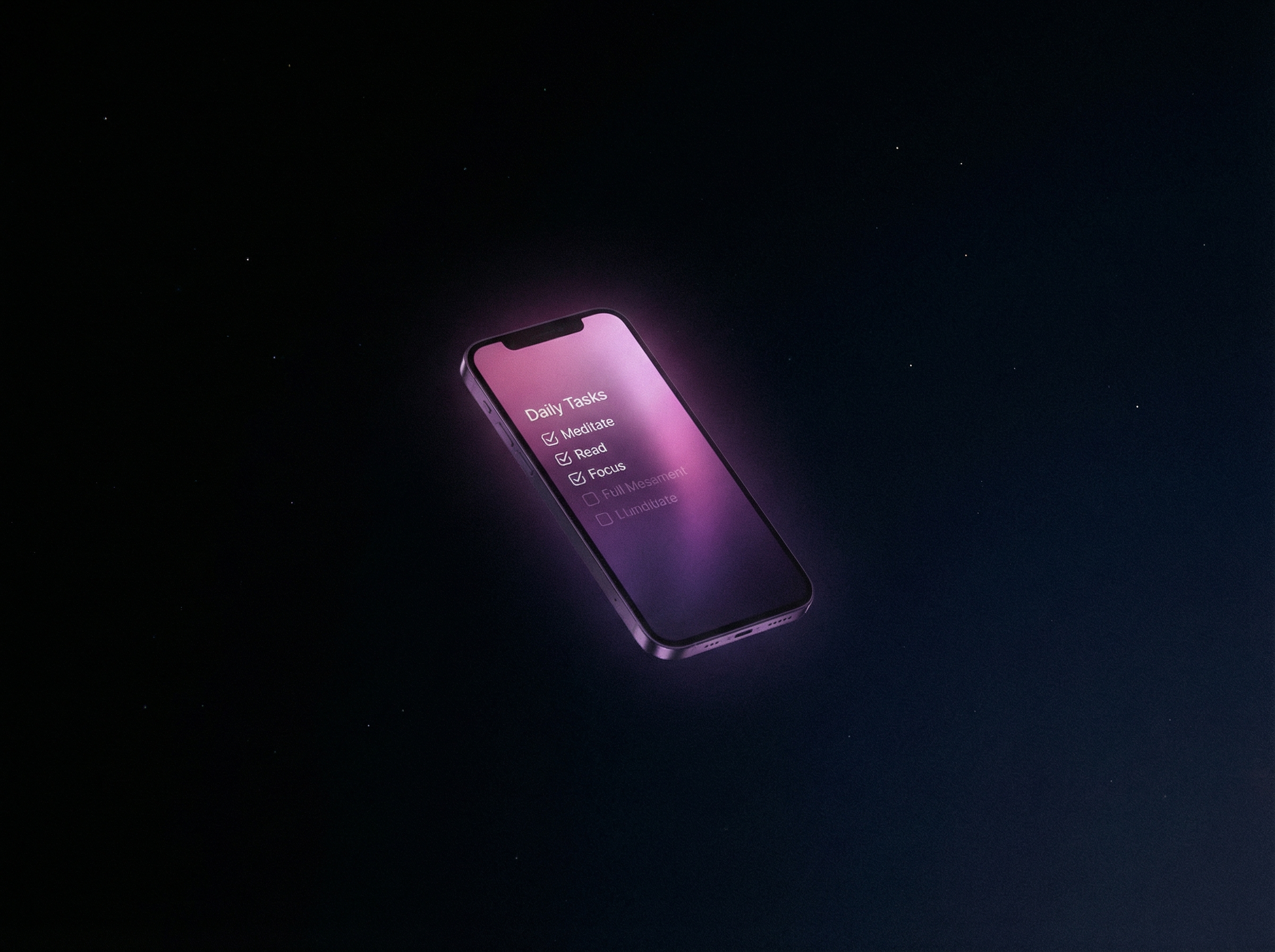
We built SubTasks for D/s dynamics, but solo mode isn’t an afterthought. If you sign up without an invite code, you’re automatically in solo mode and the full app is yours. Tasks, points, rewards, punishments, achievements, streaks. Everything works.
You assign your own tasks, track your own progress, and run the whole loop yourself. The routines you build now become the foundation of real trust when a partner enters the picture. And when you eventually bring someone into your dynamic, your account converts automatically. Your history, your points, your streaks, all of it carries over. The relationship activates on top of what you built.
If you’re looking for a way to structure your solo practice with something more engaging than a to-do list, that’s exactly what this was designed for. The gamification, the streaks, the achievements, they give solo practice a sense of momentum that a plain checklist can’t match.
Start solo. Grow into it. Or stay solo indefinitely. Either way, the structure is there when you want it.
Try SubTasks free. No partner needed.
FAQ: Solo Submissive Practice
Is solo submission “real” submission? Yes. Submission is a personal orientation and a practice, not a transaction that requires two parties to exist. You don’t stop being a submissive because you’re single, and practicing on your own builds skills that directly translate to partnered dynamics. The people who gatekeep submission as something that only counts with a Dom present are usually confusing submission with obedience. They’re related, but they’re not the same thing.
How long should I practice solo before finding a Dom? There’s no set timeline. Some people practice solo for a few weeks to get clarity, others do it for years. The question isn’t “have I practiced enough” but “do I know myself well enough to communicate my needs and limits to a partner?” When the answer feels like yes, you’re ready. If you’re not sure, keep going. And remember that solo practice doesn’t have to stop when a partner enters the picture. Many subs keep personal practices alongside their dynamic.
Can I use a D/s app without a partner? Absolutely. SubTasks was built with a solo mode for exactly this reason. You get the full feature set, including tasks, points, streaks, achievements, and rewards, without needing another person on the other end. The gamification gives your solo practice structure and momentum that a plain journal or to-do list can’t match. When you do find a partner, everything you’ve built carries over.
How do I stay motivated without a Dom holding me accountable? Tracking tools help a lot. Streaks, points, visible progress. The psychology of not wanting to break a streak works whether someone assigned it or you assigned it yourself. Community can also help. Finding other solo subs to check in with, even casually, creates a layer of social accountability that fills some of the gap. And honestly, the motivation question is part of the practice. Learning to hold yourself accountable when nobody is watching is one of the most valuable things you can develop as a submissive.